The Legacy of Wimbledon’s Iconic Centre Court
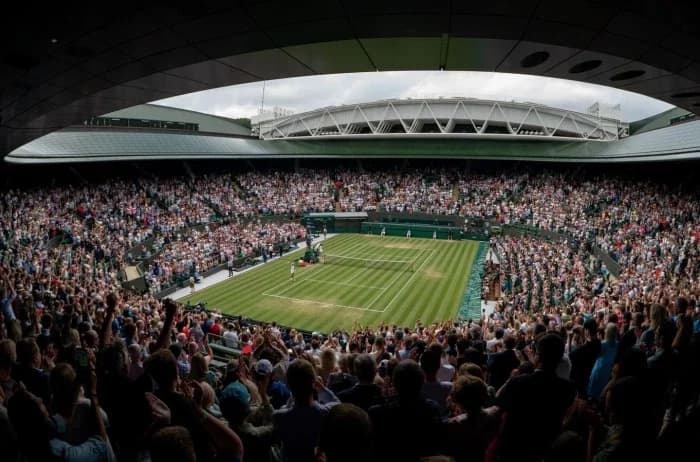
Wimbledon Centre Court, a symbol of tennis tradition and innovation, has witnessed historic moments and continues to inspire fans and players worldwide with its timeless elegance.
Wimbledon Centre Court, situated at the All England Lawn Tennis and Croquet Club in the Wimbledon suburb of southwest London, is the core of the oldest and most esteemed tennis tournament globally. First opened in 1922, this iconic venue has served as the focal point of The Championships, Wimbledon, presenting the finest talent on its immaculate grass courts. Often referred to as the “Cathedral of Tennis,” Centre Court has become a symbol of tradition, elegance, and sporting excellence.
With a history spanning more than a hundred years, Centre Court has hosted significant matches, unforgettable moments, and legendary athletes on its grass, establishing itself as a symbol of tennis heritage. In 2022, it commemorated its centennial at the Church Road site, reinforcing its status as a classic venue that continues to evoke admiration and inspiration.
Memorable Matches
Centre Court has hosted some of the most thrilling and significant matches in the history of tennis, forever marking them in the records of the sport.
Characteristics & Amenities
Centre Court stands as an engineering masterpiece and exemplifies the harmonious coexistence of tradition and modern innovation.
Significance in History
Wimbledon Centre Court is a symbol of tennis's rich heritage, seamlessly merging tradition with endurance and progress. Throughout the years, it has been instrumental not only in shaping the sport but also in marking significant cultural and social milestones.
Originally situated at Worple Road, the All England Lawn Tennis Club relocated to its current location on Church Road in 1922. This move paved the way for Centre Court to become the central hub of tennis. The initial Centre Court at Worple Road, which opened in 1884, was the first to feature permanent seating for spectators, foreshadowing the magnificent arena we now know.
Centre Court's significance was put to the test during World War II when it suffered severe damage from a bombing raid in 1940. More than 1,000 seats were destroyed, and the venue was utilized as a temporary refuge for fire and ambulance services, along with functioning as a decontamination center for wartime operations. In spite of these obstacles, the All England Club restored Centre Court, reopening it in 1946 after the war, representing not only the venue's resilience but also the enduring spirit of tennis.
In its formative years, the grass courts of Wimbledon featured a blend of 70% ryegrass and 30% red fescue. However, in 2000, the All England Club shifted to using solely ryegrass, enhancing durability while preserving the traditional playing surface of the sport. This development established a benchmark for other grass court tournaments around the globe.
Centre Court has taken the lead in integrating technology while maintaining its classic appeal. The introduction of the retractable roof in 2009 represented a significant milestone, allowing for continuous play even during adverse weather conditions. This enhancement was accompanied by state-of-the-art floodlighting, which facilitated matches taking place at night, and an air management system designed to ensure ideal conditions. Beyond its role in tennis, Centre Court has emerged as a cultural symbol, appearing in various forms of art, literature, and film. It stands as an emblem of British tradition and excellence, captivating the imaginations of millions across the globe.
Future Events
Wimbledon’s Centre Court is poised to host an exciting lineup of events that will keep tennis enthusiasts and athletes engaged. As this legendary venue adapts and grows while preserving its rich traditions, it continues to embody tennis excellence and remains a highly sought-after location for some of the most esteemed competitions in the world.
Experience for Fans
Experiencing a match at Wimbledon Centre Court is a dream come true for both avid tennis fans and casual spectators. Attendees participate in cherished Wimbledon traditions, such as savoring strawberries and cream, while also following a formal dress code that adds to the sophistication of the event.
The atmosphere among the crowd is both vibrant and courteous, enhancing the distinctive allure of the Wimbledon experience. The anticipation in the queue, the respectful applause, and the thrill during crucial match points all enrich the enchanting ambiance of the venue. Centre Court provides accessible seating options, shuttle services, and premium hospitality experiences. Additionally, fans have the opportunity to visit the Wimbledon Lawn Tennis Museum, which highlights the rich history of the Championships.
Guests can relax at the Southern Village, which offers food courts, picnic areas, and large screens showing live matches. Wimbledon Centre Court is more than just a venue; it represents a vibrant legacy. With its exceptional combination of tradition, innovation, and sporting excellence, it remains the core of tennis, inspiring both players and fans for generations to come.